 آموزش و جزوات زبان انگلیسی یادگیری زبان انگلیسی با جدیدترین مقالات و کتاب ها
مطالب مشابه



ESL Courses: The Complete Guide to Learning English Successfully
?What Are ESL Courses
ESL Courses (English as a Second Language Courses) are specialized English language programs designed for non-native speakers who want to improve their communication skills. Whether you are a beginner learning basic English or an advanced learner preparing for IELTS, TOEFL, or academic studies, ESL courses provide structured lessons that help students achieve fluency and confidence.
Today, English is the most widely used international language for business, education, travel, and technology. Millions of learners around the world enroll in ESL programs every year to improve their opportunities and connect with people globally.
?Why Are ESL Courses Important
Learning English opens doors to better educational and professional opportunities. Employers often prefer candidates with strong English communication skills, and universities frequently require proof of English proficiency.
✅ Benefits of ESL Courses include:
🔴Improved speaking and pronunciation skills
🔴Better grammar and sentence structure
🔴Expanded English vocabulary
🔴Increased confidence in conversations
🔴Higher IELTS and TOEFL scores
🔴Better career opportunities
🔴Easier international travel
🔴Enhanced academic performance
A well-designed ESL course helps learners progress step by step while building all four language skills: Listening, Speaking, Reading, and Writing.
Types of ESL Courses
Beginner ESL Courses ✅
Beginner ESL courses are designed for students with little or no knowledge of English. These courses focus on:
🔷Basic vocabulary
🔷Simple grammar structures
🔷Everyday conversations
🔷Greetings and introductions
🔷Numbers, dates, and time
Students learn how to communicate in common situations and build a strong foundation for future learning.
Intermediate ESL Courses ✅
Intermediate learners already understand basic English and can participate in simple conversations. These courses focus on:
- More complex grammar
- Reading comprehension
- Listening practice
- Everyday communication
- Writing paragraphs and emails
- Expanding vocabulary
Students become more fluent and comfortable using English in real-life situations.
3. Advanced ESL Courses
Advanced ESL programs help learners refine their language skills and achieve near-native fluency. Topics often include:
- Academic English
- Business English
- Advanced grammar
- Presentation skills
- Critical reading
- Formal writing
These courses are ideal for university students and professionals.
4. Online ESL Courses
Online ESL courses have become increasingly popular due to their flexibility and convenience. Students can learn from anywhere in the world and access lessons at their own pace.
Advantages include:
- Flexible schedules
- Lower costs
- Interactive learning tools
- Recorded lessons
- Global learning opportunities
Many learners choose online English courses because they fit busy lifestyles and offer personalized learning experiences.
Key Components of an Effective ESL Course
Speaking Practice ✅
Speaking is often the most challenging skill for English learners. Quality ESL courses provide opportunities for students to practice conversations, discussions, role-plays, and presentations.
Regular speaking practice helps students:
- Improve pronunciation
- Build confidence
- Increase fluency
- Communicate naturally
Grammar Instruction ✅
Grammar is the foundation of effective communication. A comprehensive ESL Grammar Course should cover:
- Present, past, and future tenses
- Modal verbs
- Conditionals
- Passive voice
- Relative clauses
- Articles and determiners
- Sentence structure
Understanding grammar enables students to express themselves accurately and clearly.
Vocabulary Development ✅
Vocabulary is essential for communication. Effective ESL programs teach words and phrases related to:
- Daily life
- Education
- Business
- Travel
- Technology
- Health
- Social interactions
The more vocabulary students learn, the more effectively they can communicate.
Listening Skills ✅
Listening activities expose learners to authentic English speech. Students improve comprehension through:
- Audio lessons
- Podcasts
- Interviews
- Dialogues
- Videos
Strong listening skills help learners understand native speakers and participate in conversations confidently.
Reading Practice ✅
Reading helps students develop vocabulary, grammar awareness, and comprehension skills. ESL courses often include:
- Articles
- Stories
- News reports
- Academic texts
- Business documents
Reading regularly improves overall language proficiency.
Writing Skills ✅
Writing instruction helps learners communicate effectively in academic and professional settings. Students practice:
- Sentences
- Paragraphs
- Essays
- Reports
- Emails
- IELTS writing tasks
Writing strengthens grammar, vocabulary, and organizational skills.
ESL Courses for IELTS Preparation
Many learners enroll in ESL courses to prepare for IELTS exams. IELTS preparation courses focus on:
- IELTS Speaking
- IELTS Writing Task 1
- IELTS Writing Task 2
- Reading strategies
- Listening techniques
- Vocabulary development
Students learn exam strategies and practice under realistic conditions to achieve higher band scores.
Business English ESL Courses
Business English courses are designed for professionals who need English in the workplace.
Topics often include:
- Business communication
- Meetings and presentations
- Professional emails
- Negotiation skills
- Interview preparation
- Workplace vocabulary
Business English training can significantly improve career prospects and workplace performance.
How to Choose the Best ESL Course
When selecting an ESL course, consider the following factors:
Your Goals
Ask yourself why you want to learn English:
- Academic studies
- Career advancement
- Travel
- Immigration
- IELTS preparation
- General communication
Your goals should guide your course selection.
Course Level
Choose a course that matches your current proficiency level. Taking a course that is too difficult or too easy can slow your progress.
Qualified Instructors
Experienced ESL teachers understand language learning challenges and can provide effective guidance and feedback.
Course Content
Look for programs that develop all four language skills:
- Listening
- Speaking
- Reading
- Writing
Balanced instruction produces the best results.
Student Support
Good ESL programs offer:
- Progress tracking
- Feedback
- Practice materials
- Extra resources
- Student support services
These features help learners stay motivated and achieve success.
Tips for Success in ESL Courses
Practice Every Day
Consistency is more important than intensity. Even 20–30 minutes of daily practice can produce significant improvement.
Speak English Regularly
Use English whenever possible. Join conversation groups, participate in discussions, and practice speaking with classmates or language partners.
Read English Content
Read books, articles, blogs, and news reports to improve vocabulary and comprehension.
Watch English Videos
Watching English videos and movies helps learners improve listening skills and learn natural expressions.
Keep a Vocabulary Notebook
Record new words and phrases, review them regularly, and use them in sentences.
Set Realistic Goals
Short-term goals help maintain motivation and measure progress.
Examples include:
- Learning 20 new words per week
- Reading one article daily
- Practicing speaking for 15 minutes each day
Why Professional ESL Training Makes a Difference
Self-study can be helpful, but professional ESL instruction offers structured learning, expert guidance, and personalized feedback.
Professional ESL courses provide:
- Organized curriculum
- Clear learning objectives
- Interactive activities
- Expert correction
- Progress assessments
- Speaking opportunities
Students often progress faster when guided by experienced instructors.
Transform Your English with Two Essential ESL Books
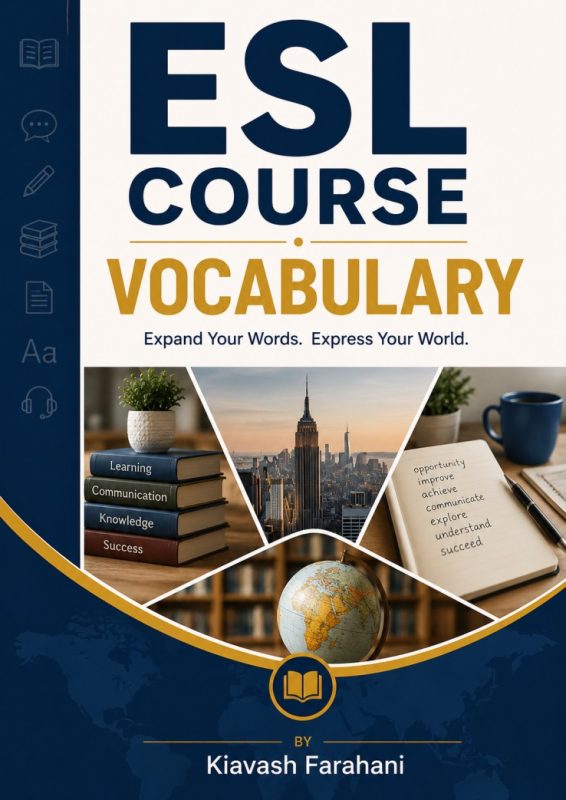
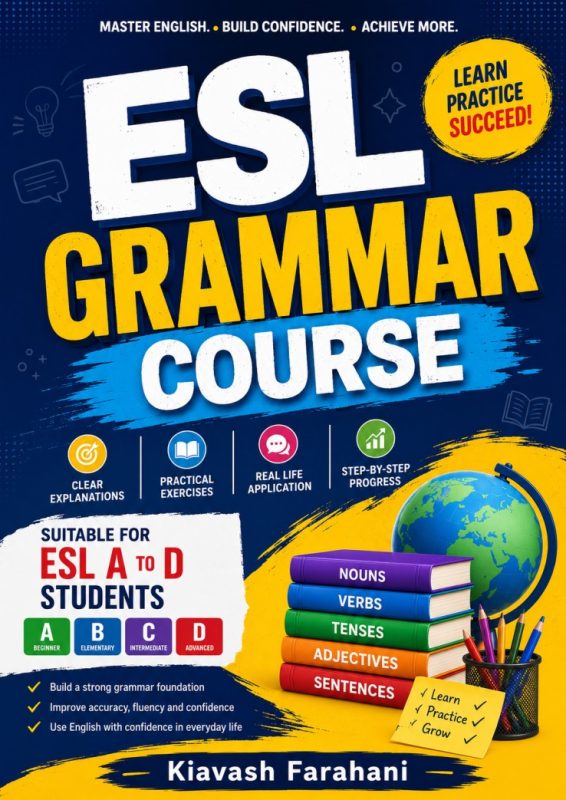
If you are serious about improving your English, the ESL Vocabulary Book and ESL Grammar Book are the perfect combination for your success. Written by Kiavash Farahani, an English language teacher with over 24 years of teaching experience and author of more than 30 ESL books, these practical PDF resources are designed to help learners build a strong foundation in English. The ESL Vocabulary Book teaches the most useful words, phrases, and expressions for everyday communication, while the ESL Grammar Book explains English grammar in a simple, clear, and easy-to-understand way with practical examples. Together, these books will improve your speaking, writing, reading, and listening skills, helping you communicate with confidence in academic, professional, and everyday situations. Invest in your future today and start your journey toward English fluency with these comprehensive ESL learning guides. Download your PDF copies now and take the next step toward achieving your English language goals.
Final Thoughts
ESL courses provide one of the most effective ways to learn English and achieve language fluency. Whether you are a beginner learning basic communication skills, a professional seeking career advancement, or a student preparing for IELTS, the right ESL program can help you reach your goals.
By developing speaking, listening, reading, writing, grammar, and vocabulary skills, ESL learners gain the confidence needed to succeed in today’s global environment.
Investing in a quality English language course is an investment in your future. Start your English learning journey today and unlock new opportunities in education, business, travel, and personal growth.




از داشتن استادی مثل شما خوشحالم استاد فراهانی عزیز. مبین مدرسه رشد
از لطف شما سپاسگذارم. براتون بهترین هارو از پروردگار آرزومندم.🌹
I learned a lot with you dear teacher. You are one of the best teachers i have ever had during my life.
Thanks a lot. We are happy that it was useful for you.🌹
استادددددددد میس یووووووو😘😘😘😘😘😘
درود و سپاس از لطف شما🌹